
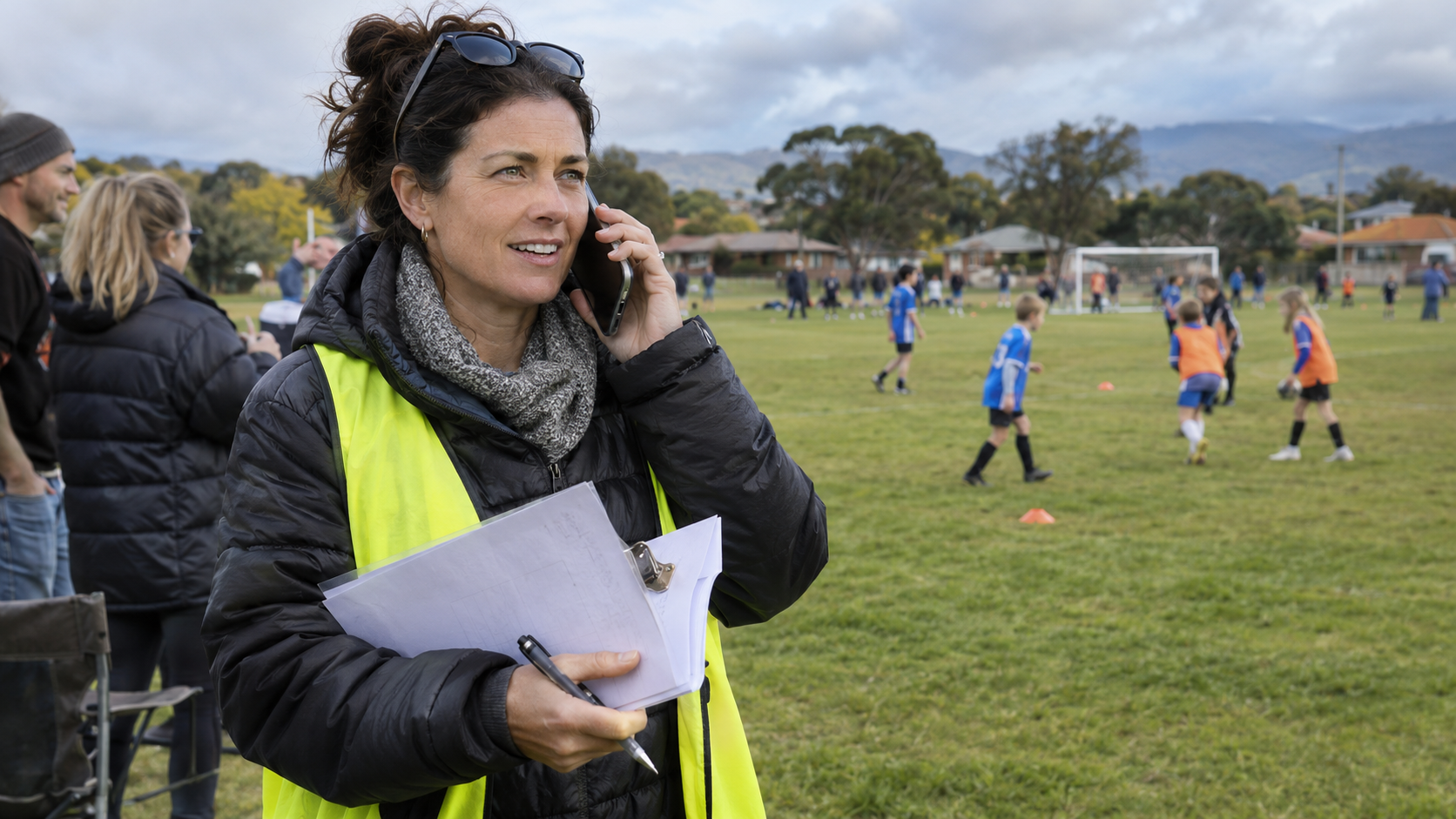
Every school or club needs someone to organise its junior football. Meet the volunteer who takes on rather more than they probably bargained for. (3 minute read)
Your child has a football team, a coach and somewhere to play on Saturday morning. Someone had to organise all that.
In the Central Region Junior Football Association (CRJFA), where I'm President, that person is your school or club delegate. Other junior associations have their own arrangements, and the role may go by a different name.
The title sounds rather unionised. Unfortunately, it doesn't come with union wages.
The Person Who Puts Their Hand Up
Often the delegate is the person who reluctantly volunteers because nobody else has. They know that without someone taking responsibility, their school or club might not be able to enter any teams at all.
So they put their hand up.
What follows can be a rather rude introduction to football administration. The delegate organises junior football across their whole school or club, not just one team. Depending on the size of the school or club, that can mean dozens of teams and hundreds of children. It's usually taken on by someone with a job and plenty of other things to do.
What Does a Delegate Actually Do?
More than most people realise.
Before the season, delegates help form teams, find coaches and team managers, enter teams into the competition and make sure families get the information they need. Once football starts, they deal with team changes, fixture questions, ground closures, messages from the association and the coach who has just pulled out on Friday night.
They're also the main contact between their school or club and CRJFA.
Sorting Out Problems Between Teams
There's another important part of the job that parents rarely see.
When something goes wrong between teams from different schools or clubs, the delegates usually speak directly to each other. It might be a disagreement about a match, a concern about behaviour or a misunderstanding between coaches.
Rather than going straight to CRJFA, the delegates try to sort it out between themselves. Most problems are better handled by two sensible people having a conversation than by a chain of increasingly indignant emails. If they can't resolve it, they can refer it to the association.
Who Should Parents Contact?
If you have a question or concern, start with your child's coach or team manager. If they can't help, contact your school or club delegate, who can raise it with CRJFA if needed.
Delegates are human and can get things wrong too. If you're not satisfied with how something has been handled, you can ask for it to go to the association. The usual pathway is there to solve problems efficiently, not to stop parents raising legitimate concerns.
Child safety concerns are different. If a child is in immediate danger, call 000. If you're worried about a child's safety or wellbeing, you can talk to your school or club's Member Protection Information Officer or child safety contact. You can also go straight to the Strong Families Safe Kids Advice and Referral Line on 1800 000 123. You never need to wait for the coach, delegate or association before raising a child safety concern.
A Tough Volunteer Gig
I see how much work delegates put into making junior football possible. They organise, coordinate, solve problems and occasionally cop the flak for something that wasn't remotely their fault.
Most didn't volunteer out of a burning ambition to become a football administrator. They simply wanted the children at their school or club to have a game.
So the next time you see your delegate, perhaps ask whether there's anything you can help with.
They might be so surprised they fall over.